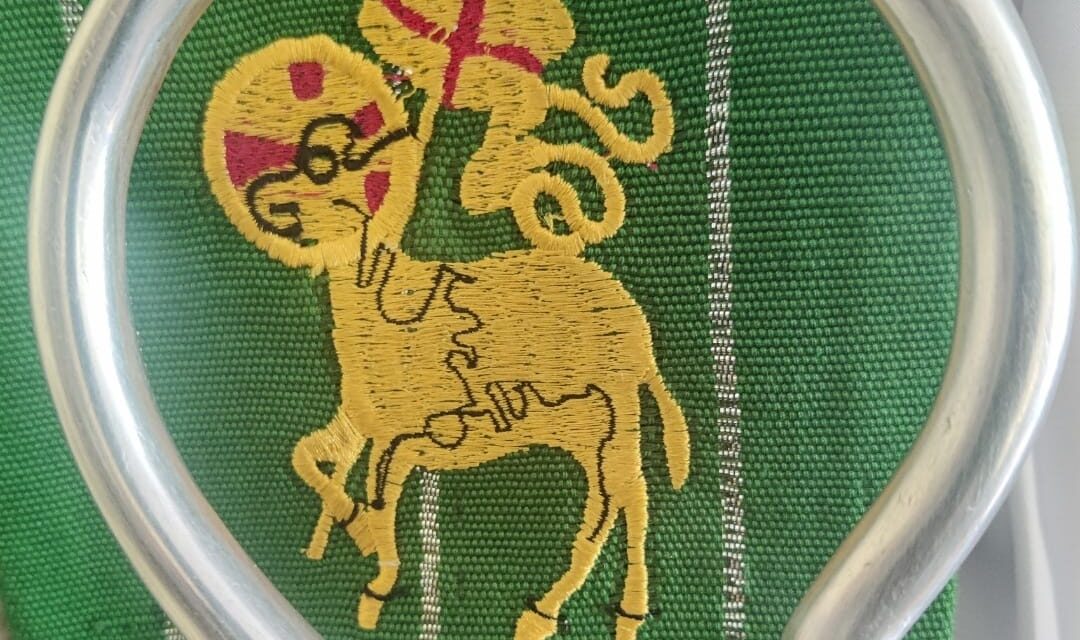
Happy Golden Jubilee Biennial Conference! Early this year, Methodist Church Nigeria marked the 50th year of our episcopacy. To the glory of God, we are celebrating the 50th/15th Biennial Conference at Ibadan, not just as the passage of time, but as the legacy of faith of our fathers, mission and evangelism, service, and community. Ibadan, just a diocese 24 years ago, is now an Archdiocese, comprising Remo Diocese created in 1991 at Ifaki Conference, Ijebu Diocese created in 1995 at Remo Conference, Ogbomoso Diocese created in 1996 at Ikot Ekpene Conference, Agodi Diocese created in 2006 at Uyo Diocese, Elekuro Diocese created in 2007 by acts of the Conference Connexional Council – CCC, (acting on behalf of the Conference), Oyo Diocese created in 2012 at Yaba Conference, and Ibarapa Diocese created in 2024 at Ikot Ekpene. May the years ahead for Ibadan Archdiocese with His Grace, Most Rev. Olugbenga Fafeyiwa and his team, and the Conference in general, under the leadership of His Eminence (Dr) Oliver Aba, Prelate, Methodist Church Nigeria, be filled with renewed purpose, soul-winning, abundant blessings, and continued impact at home and abroad, in Jesus’ name. We give God praise for this magnificent missional milestone.
The 2026 Ibadan Methodist Jubilee – 50th/15th Biennial Conference is very strategic and calls for self-evaluation to reclaim old-time Methodist scriptural Christianity and spirituality. 24 years ago, the 38th/3rd Biennial Methodist Conference hosted by Ibadan diocese was from 1st to 8th August 2002, and the theme of the Conference was ‘Follow me, A Call to Discipleship.’
His Eminence Dr Sunday Coffie Mbang (1936-2023), the second patriarch and first Prelate, Methodist Church Nigeria, in his 2002 Prelate’s address to the Conference at Ibadan on 5th August 2002, points us to the essence and what John Wesley called “Christian Conferencing,” a means of grace. His Eminence Mbang said, “As we come apart from all labours, engagements and recreational activities in retreat, let us all use the opportunity and time God has given to us to “wait on” Him in quiet meditation, prayers, study of His Word, in discussion, fellowship and in telling others how God has been good and merciful to us. Let us use this time to make new friends. Above all, let us make the best use of the privilege God in His infinite mercy has granted us to be here, to do something new in our lives and for Him. Posterity will judge each one of us on how we utilise this golden opportunity to represent them and help build the Church handed over to us by our forebears. So help us, Lord… Let me hope that by the end of this Conference, your life will change for the better and Methodist Church Nigeria, and the nation will be the greatest beneficiary as a result of it.’
On the theme of the Conference 24 years ago, His Eminence Mbang said, “Discipleship involves walking along with Jesus in an attitude of study, obedience and imitation. The implication here is that a disciple of Jesus Christ must first and foremost know the Jesus whom they are to follow…Discipleship is not without conditionalities, as the only possible doorway to discipleship may entail forsaking the dearest things in our life to be able to follow Him. Candidates to this calling may be required to forgo home, kindred, occupation, and possessions for the sake of Christ. Discipleship can never be popular and easy as it often entails costs and risks.’
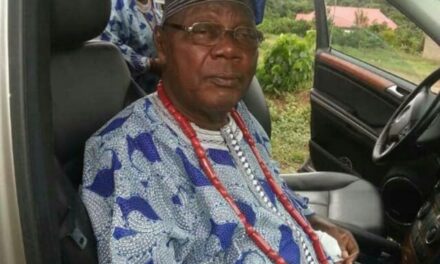
24 years ago, at the Ibadan Conference, His Eminence Mbang, based on his pastoral experience, challenged us on the declining state of our scriptural Christianity and spirituality. He said, “Recently, I was at the palace of one of our revered traditional rulers on a courtesy call. This Methodist leader complained that our Church is fast losing what he considered was the ‘old time Methodist religion.’ What attracted early converts to Methodism is now either being abandoned or only lip service is paid to it. More attention and time are given to social activities and the collection of money rather than the care of the body and the souls of our members. It has even been alleged that very little is undertaken today in the area of spiritual development. How regularly do we have Bible studies, prayers and retreats, etc. in our local churches? How many of our members, if called upon to pray extempore, will find it easy to do so? Bible texts recitation, which was part and parcel of the discussion and conversation of Methodist members, is lacking today. Why are our members spiritually backward?’
On the status of the Class Meeting, a means by which the members would spread scriptural holiness through the land, His Eminence Mbang, 24 years ago, asked the Conference members, ‘It will be interesting to inquire from each member of this Conference the status of this legacy in our local churches today? Do we still have Class Meetings? Probably, it is time we re-introduce John Wesley’s Class Meeting model in our local churches to bring back Scriptural Christianity and spirituality amongst the rank and file, from top to bottom of members in Methodist Church Nigeria.’ 24 years after Ibadan Conference, are the words of His Eminence Mbang still resonating? 24 years ago, His Eminence Mbang bemoaned the increasing rate of indiscipline among the ordained and lay members of the church as a result of the paucity in scriptural Christianity and spirituality. The sad development ranges from misappropriation of church funds, land, and property ‘as a result of the conspiracy of some leaders and some clergymen. Some Lay Presidents are not in the habit of attending Conference statutory meetings. The craze to be rich, to drive expensive cars, to own the entire world through dubious means by even the young ones in the ordained ministry should be of great concern to this Conference.’
On the problems of retired and retiring bishops, His Eminence Mbang expressed his dismay about bishops living ‘in homes unfit for Presbyters and Priests and in rented buildings.’ According to him, ‘I have seen Methodist Bishops go on Okada and in rickety vehicles for their assignment. Many of them can only attend meetings by using public buses. The Conference is not unaware of this unusual treatment of their leaders. Could this be the reason why some of our members treat them with little or no respect? Our Bishops can neither compare in all its ramifications with their colleagues in America, South Korea nor back home with those in the Anglican and Catholic churches in Nigeria.’
On the Methodist Church Nigeria Merit Award, His Eminence Mbang, in his address 24 years ago, called for a return to the transparent nature of this award; according to him, ‘information has reached me that the principles established by the Conference…on this award are being set aside in some of our dioceses.’ He made it clear that ‘the entire Church and her members must be involved in the selection of the candidates to be considered by Conference for this award. The Local Church through her Leaders’ Meeting, the Circuit through her Quarterly Meeting, and the Synod, through the Merits Award Committee of the Diocese, must participate in the selection. There must be nothing secret in the nomination of Methodist sons and daughters from the Dioceses for consideration by Conference.’
His Eminence Mbang’s conclusion and concerns in his address 24 years ago at Ibadan offer us a renewing reflection and revisitation during the 2026 Ibadan Methodist Jubilee Biennial Conference. He said, “This year’s Conference must be used to set a new agenda for the work of God in our church. This Conference has to provide the necessary ingredients for the terminus ad quem of all financial delinquencies in Methodist Church Nigeria. Above all, let this Conference bring about the much-desired spiritual revival and spiritual reawakening among the rank and file of our members and people. Let the Wesley spirit return in our church today and for evermore. Amen.’
His Eminence Mbang’s concerns 24 years ago recall the traditional opening hymn at the annual Methodist Conferences which usually begins with the words, ‘And are we yet alive, and see each other’s face?’ As we are eager to see each other’s face at Ibadan again after 24years, this hymn offers us a renewing opportunity for the ‘Old time Methodist religion.’ The question in this verse is a good one to ask ourselves as individuals, dioceses, and as Conference at the Ibadan 2026 Conference. ‘And are we yet alive?’ As a living soul, spirit and body, we are made alive in Jesus Christ (Eph 2:4-). The BBC Bitesize website provided seven helpful characteristics of living organisms for our reflection: Movement – and not a museum; Reproduction – by sharing Jesus; Sensitivity – to the need of others; Growth – like a mustard seed; Respiration – as we open to the breath of the Holy Spirit to cleanse, energise, empower and enable us to live in a way that brings honour to God and extends his Kingdom on the earth; Excretion – Holy Spirit helping us to repent and ask for forgiveness so that we do not carry harmful thoughts, words and deeds and through them cause damage to ourselves, others and the cause of the Gospel; Nutrition – Through the study of God’s WORD. Our focus for the 2026 Ibadan Jubilee Biennial Conference to reclaim old-time Methodist scriptural Christianity and spirituality calls us to reflect sincerely as we prayerfully sing our welcoming tradition hymn, ‘And are we yet alive?’
Let us pray – When, with the powers of evil vanquished, Oh Lord, let Your glory shine eternally. Reawaken in us, pilgrims of Hope, a yearning for the treasures of heaven in Jesus’ name.