Methodism, a revival of religion, has no vitality without vital Christians. Professor Phil R. Meadows explained that Christian vitality is measured not by institutional effectiveness, but by missionary zeal: ‘This zeal is a hungering and thirsting for just one thing: the glory of God and the salvation of souls. It cannot be manufactured but can be caught from those who have been gifted by the Spirit to continue the charism of their founder and fanned into flame.’ Professor William Abraham, in his book Waking from Doctrinal Amnesia, explored the consequences of Methodist churches losing their way spiritually because of cultural trends. He said, ‘The church … is not centred on Cod; it is not rooted and anchored in the life, death, and resurrection of Jesus Christ; it does not live by the power of the Holy Spirit.’ According to Abraham, the Methodist church has been so compromised by secularism that “it no longer has any shared public discourse of its own, other than that borrowed from the secular world.”
Russell Richey, Methodism’s preeminent historian, has written that Methodism’s magnificent obsession in the late nineteenth century shifted from evangelism to ecumenism. Evangelism is about power: the active presence of the Holy Spirit, which inspired Wesley’s sermons and the consensus fidelium of early Methodism. Notable Methodist historians remind us that ‘the price of ecumenism was high—the loss of doctrinal identity,’ biblical authority, and warm-hearted evangelism. The cost of ecclesiastical and ecumenical ambitions compromised both Methodism’s central message and evangelistic spirit.
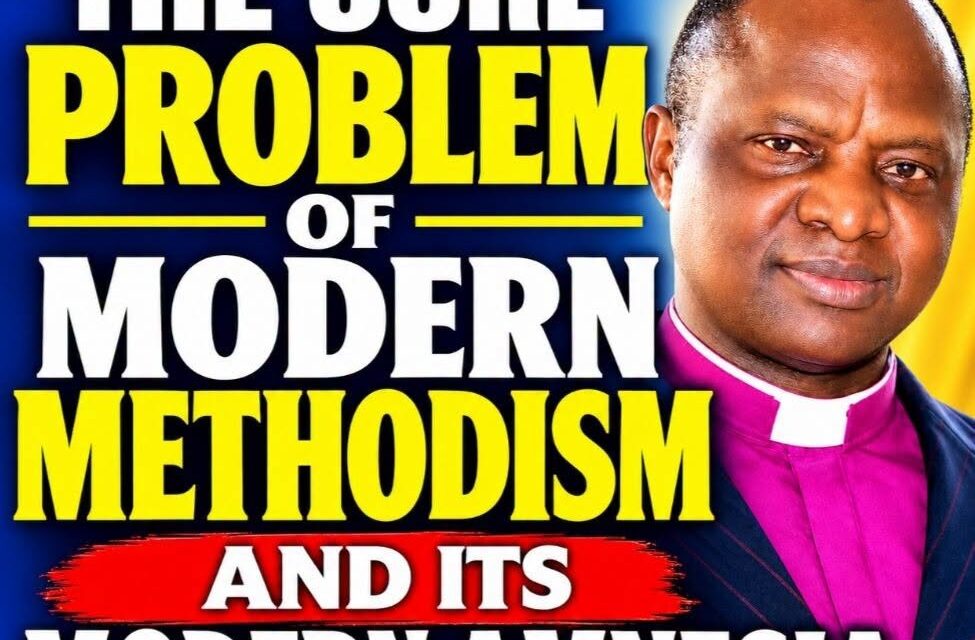
The core problem of modern Methodism is not money for ecumenism or building, but a lack of power for evangelism that shaped its historic mission and identity. In this context, power is not financial, academic, or hierarchical. The lack of power, the active presence of the Holy Spirit, points to different shifts, liberalism, divisions, and decline in Methodism, a disobedience to its missional identity as a movement, mission, and a message of spreading scriptural holiness across the land. The decline of Methodism as an ecclesiastical institution reminds us of the formalism in the Church of England, the very problem that the early Methodist movement sought to address. Early Methodism was a “contagious Christian movement” that ‘contrasted remarkably with the more institutionalized expressions of Christianity.’
Disobedience is a choice of the will. Disobedience is idolatry. Disobedience is arrogance and pride. Disobedience is the pursuit of futility. John Wesley famously warned that Methodism could become a dead sect engaging in religious routines without genuine spiritual vitality. In disobedience and a shift from its original doctrine, spirit and discipline, Methodism increasingly becomes only the form of religion without its power, the active presence of the Holy Spirit transforming hearts and communities. Sadly, denominational lawn signs are disappearing globally.
When a denomination is disobedient to its missionary identity, it suffers from spiritual atrophy, ‘a mile wide and an inch deep.’ It loses its vitality, relevance, and prophetic voice because it is trying to exist for itself, whereas Jesus Christ designed it to give itself away for the sake of the world. The sin of disobedience to our mission identity occurs when we focus on our self-preservation, institutional power, or internal comfort rather than fulfilling its core mandate to be a missionary outreach to the world.
A church with abundant financial resources can still decline if it lacks a clear reason to exist, a strategy to reach people, and a compelling gospel message. Methodism without movement, mission, and message amounts to a museum with managers and attendants. Beyond the measurable symptoms of financial strain and declining attendance,the root cause of Methodism’s problem is a departure from the foundational dynamics and missional identity that launched the Methodist revival.
Modern Methodism faces structural and spiritual challenges in the form of movement versus institution. The shift from a movement driven by John Wesley’s cell groups and field preaching has transitioned into a heavily bureaucratised institution and partnership. Sadly, institutionalisation through different lenses, including ecumenism and partnership, continues to shift Methodism’s primary focus from rapid spiritual and missional expansion to property maintenance, administrative preservation, and ecumenical and committee management.
When the “machinery” of the church requires more energy to maintain than the mission it was built to support, maintenance takes over mission; administration becomes more costly and important than mission and evangelism. Methodism’s focus on keeping church doors open and managing internal and ecumenical institutional politics is a core shift and challenge to the reason for Methodist existence: spreading scriptural holiness over the land. Methodism is an urgent evangelical and renewing movement that emphasises personal conversion, the assurance of salvation, sanctification (holiness of heart and life), and social justice as a powerful outward expression of faith. Beyond a fragmented and diluted identity, Methodism’s distinct, clear, and compelling message offers a powerful missional theological voice for transformative mission and discipleship.