
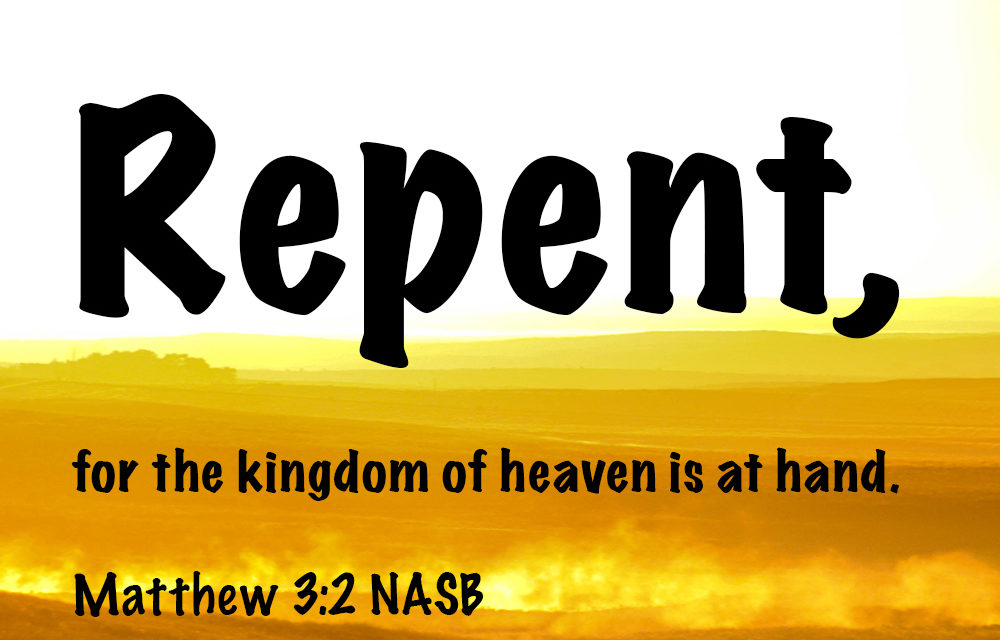
“Repent, for the Kingdom of Heaven is near” (Matt. 3:2)
Matthew, like the other Gospels, identifies the beginning of Jesus’ ministry with His baptism by John (Matt 3). John, Jesus’ cousin, paved the way for Jesus Christ. The wilderness experience of Jesus after His baptism models for us the importance of purification, preparation and reliance on God for spiritual health and growth. Jesus Christ, without sin, is baptised to fulfil righteousness and identify with humanity (Matthew 3:15). John’s core message was “Repent, for the kingdom of heaven is near,” meaning redemption is conditional upon genuine repentance.
John confronted leaders who lived hypocritically, and even King Herod. The accounts of John’s preaching and his baptism of Jesus in Matthew, among others, reveal his rebuke of the Pharisees and Sadducees (Matt 3:7-12). John, beyond the flattery of the Pharisees and Sadducees, calls for repentance, announcing that God’s coming in fiery judgement is imminent (v.2). Repentance is not just a change of mind. Repentance is a turning from transgression and turning (returning) to God. The reflection is that redemption for the repentant is found in preparing for the imminent arrival of God’s Kingdom through sincere repentance and faith in Jesus Christ.
Like King Herod, the Pharisees and Sadducees were not only insecure when strangers announced Jesus’ birth. The Pharisees and Sadducees were rivals who disagreed on many things, but they were united in their opposition to John’s work and later in their opposition to Jesus. John’s references to the Pharisees and Sadducees as “vipers” point to their poisonous spiritual influence. The Pharisees and Sadducees epitomised the depth of insecurity, wickedness, and the failure of leadership that had sunk.
John’s ministry in the wilderness served as a model of reformation, revival, and renewal. John’s ministry was against one of the Pharisees and Sadducees’ fundamental tenets, that being a Jew according to the flesh, a physical descendant of Abraham, was essentially enough to have a place in God’s kingdom. John’s preaching on baptism of repentance said otherwise, that is, proclaiming that physical lineage does not make one a faithful member of God’s people. He said, “Brood of vipers! Who warned you to flee from the wrath to come? Therefore, bear fruit worthy of repentance, and do not think to say to yourselves, ‘We have Abraham as our father.’ For I say to you that God is able to raise up children to Abraham from these stones’ (Matt 3:7b-9). Being a genetic descendant of Abraham is not sufficient without repentance. God can raise up Abrahamic descendants from stone, that is, ‘through miraculous action.’
John’s preaching is about God’s people made up of repentant sinners who love the Lord with all that they are (Rom 2:28-29, Deut 10:16). God redeems only those who repent and trust in His promises (Jn 3:16). John’s description of Jesus as having a winnowing fork to separate the “wheat” (true believers) from the “chaff” (unbelievers) warns us that, ‘wheat will be gathered into the granary (salvation), while the chaff will be burned with unquenchable fire (judgment).’
The wages of sin are death – spiritual and physical. Beloved, redemption is a gracious gift offered to those who acknowledge their sin, genuinely turn away from it, and place their faith in Jesus Christ, demonstrating this transformation through a changed lifestyle. John’s warning of judgment is an important encouragement for all of us, especially the leaders of the church, to be awake and ready to meet Jesus at His second coming (Matt 24:44). Dear friends, remember, the grass withers, the flower fades. However, the word of our God endures forever. The King is Coming Again. Have you repented of your sin?
Happy renewing Advent.









Recent Comments