
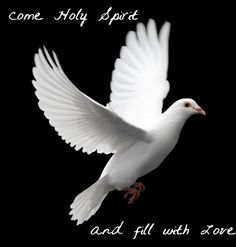
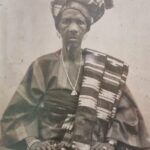
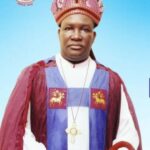
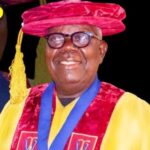
God is present amid His church, the Methodist Church Nigeria, just as He was present among the 7 churches mentioned in Revelation 2-3. To each of those churches, as well as to us, the repeated command is: “He who has an ear, let him hear what the Spirit says to the churches.” The insight is that the Holy Spirit speaks to churches through Scripture and leaders, granting divine wisdom, courage, and discernment, often guiding them to act beyond their own abilities. For example, Patriarch Professor Bolaji Idowu, His Eminence Dr Sunday Mbang, and Bishop Thompson Tanimowo Solaru at different times in the life of the Methodist Church Nigeria spoke through spiritual prompting in decision-making, empowered to speak truth with boldness, navigated crisis, developed strategies, rather than relying solely on human intellect or inherited organisational pattern and trends. The 2026 Asaba Methodist Prayer- Apex Leadership Retreat calls us to hear the Holy Spirit, coupled with the spiritual burdens of our past leaders, with insights relevant to our time, as in the days and times they spoke.
The vision behind the first Asaba Methodist retreat in 1974 was clear: to reorder the life of the church, structurally and spiritually. The emergence of the leadership of Patriarch Bolaji Idowu on October 4, 1972, was accompanied by his repositioning and indigenising visions, in contrast to the inherited organisational pattern of British Methodism. Patriarch Idowu’s leadership emerged at a time when British Methodism, in an increasingly secular society, was transitioning and declining from a city-centred, mission-focused institution to one facing challenges in maintaining attendance, prompting theological shifts and agitations for liturgical renewal movements and changes in worship style. Patriarch Idowu did not just lead or apply culture theologically; he was not a passive consumer of imported culture, nor did he have blind spots to sin tolerance. He was a missional “cultural agent” who used Scripture as a renewing and “corrective lens”, thereby “uncovering the idols of fallen culture and exposing them to the truth of God’s Word.” He raised the inadequacies of the inherited pattern of worship and leadership, among others, which were not originally designed for export.
Patriarch Idowu, like John Wesley, was not just a scholar but a leader of his times, engaging with the spiritual and intellectual climate of the day, home and abroad, making sense of worship, liturgy, and faith in the face of certain ideological ideas. Just as David Hempton in his book, Methodism: Empire of the Spirit, identified the influence of the Enlightenment on John Wesley’s thinking that enabled him, despite his hight churchmanship and priesthood in the Church of England to adapt and to established new form of worship, Patriarch Idowu’s vision of Asaba retreat 52 year ago was best construed as an ‘exodus’ from the constraints of British Methodist modernity and organisational pattern. Using Kevin Vanhoozer’s words, the concept of the Asaba retreat is a missional ‘demand to let particular (people) be themselves rather than having to conform to the structure of the prevailing ideological or political systems.’
Patriarch Idowu’s idea of ordering (indigenised repositioning) of the ministry, structure, and image of the Methodist Church Nigeria beyond the folly of mindlessly following dogmatic belief was not just an end, but an awakening to hear what the Spirit is saying to Nigerian Methodism – a break free from idols of fallen culture, theology, and liturgy. He said, ‘With the Gospel, we were handed intact the organisational pattern of British Methodism…The time has now come when we have to consider, or reconsider, our set-up in relation to restoring the years that the locust has eaten.’ [1] Lost years are missional and spiritually misdirected years, a dead end, Christ-less years of maintenance over mission. The church is not a ceremonial or sermon factory. It is a discipleship engine. The Gospel is about making disciples and not just hosting weekend services and meeting after meeting without movement. Organisational structures or leadership that do not align with biblical principles set the church up for inefficiency, frustration, and decline, hence the need for the first Asaba retreat, a Christian conferencing.
Asaba retreat, a means of grace and a channel for experiencing God’s presence, is to create space for the Holy Spirit to work through the leadership (clergy and laity) to empower and restore the years the locust has eaten. Asaba retreat is to foster a ‘whole life, lifelong and world-transforming’ discipleship, a contextualised mission that engages with people’s lives rather than focusing on church maintenance.
Asaba retreat inspired a reverse mission to overcome the damage to the Gospel caused by the inherited organisational pattern and structure. The Asaba retreat is to multiply fruitfulness, deepen communion with Jesus Christ, foster spiritual renewal, and remove shame from the Methodist Church Nigeria (Joel 2:25-27). The indigenised vision behind the 1974 Asaba retreat was a call to move from spiritual despair and economic theology of the inherited organisational pattern to a hope for future fruitfulness and growth.
Patriarch Idowu’s burden was against church organisational patterns and structures that prioritise self-preservation, racism, tradition, and business-like efficiency over the core mission of soul-winning and discipleship. Inward-looking and focused, structures and leadership shaped by European secularisation stifle mission and evangelism, turning the church into a club or institution rather than a movement. Patriarch Idowu, with mission foresight and his international exposure, saw the clergy-centred and passive laity organisational pattern of British Methodism and its future decline. Such a church structure pays lip service to evangelism, promoting a worldview ‘club’ mentality that focuses on internal comfort rather than external outreach, thereby killing evangelistic focus and zeal.
Any church organisational pattern or structure that lacks a clear intentional discipleship structure, a clear path for moving people from being newcomers to mature disciples, not only hinders the Gospel, but it also declines the church, by promoting ‘consumer-driven’ with focus on controlling and personal preferences rather than the proclamation of Jesus Christ.
Patriarch Idowu, during his investiture and consecration service on January 20, 1973, called for the review of the inherited British Methodist constitution to reflect and emphasise itinerant, indigenous, missional practices in Nigerian Methodism. His call led to the 1974 Asaba Retreat. The retreat’s goals, which involved participants, clergy, and laity across the conference area, were to ensure everyone feels invested in enhancing effective and adequate ministration to the needs of the people in their native context. This was the vision behind the 1974 Asaba Retreat, which adopted an episcopal structure.
The first historic retreat was held in Asaba from February 1-3, 1974, to establish a new structure and spiritual patterns for Nigerian Methodism. As a follow-up to the retreat, at the 13th Conference of the Methodist Church Nigeria, held in Immanuel College Chapel, Ibadan, from November 27 to December 5, 1974, the Constitution Drafting Committee, composed of eminent Methodist lawyers and members of the Faith and Order Committee, headed by Hon. Justice Olu Ayoola, introduced the proposed Constitution. After the amendments were made, the Conference approved the new Constitution. A special committee was set up to review the draft before the 14th annual Conference at Calabar from September 2 to 12, 1975, which ratified the final copy and fixed January 20, 1976, as the “Appointed Day” service at Methodist Church of the Trinity, Tinubu, Lagos. The service began an indigenous corporate Methodist episcopacy structure in Nigeria, where Patriarch Idowu and other appointed Archbishops and Bishops were consecrated and invested. In 1976, the church was restructured into 4 archdioceses – Lagos, Ilesa, Calabar, and Enugu, and 9 dioceses – Lagos, Ibadan, North, Ilesa, Ifaki, Calabar, Ikot Ekpene, Enugu, and Umuahia.
The adoption of corporate episcopacy was not just to be a purely democratic organisational structure. Bishop T. T. Solaru, the first Methodist bishop of Ibadan, in his sermon, preached at the Service of Thanksgiving in connection with “The Appointed Day” events at Hoare’s Memorial Methodist Church, Yaba, on January 26, 1976, said, “Episcopacy is not an end in itself. It is a means to the supreme aim: Spreading the scriptural holiness throughout the land.” When a leadership pattern becomes an end, a mere structure, it prioritises self-preservation, tradition, and business-like efficiency over the core mission of soul-winning and discipleship.
The adoption of corporate episcopacy as an organisational structure was just one aspect of the 1974 Asaba retreat proposal. Bishop Solaru explained that the successful execution of one part of the Asaba retreat proposals, the 1976 Methodist Constitution, must be followed by the enriching and renewing concept of Methodist Liturgy, Ritual and Offices for effective discipleship, mentoring, and spreading the scriptural holiness throughout the land. According to him, the follow-up would help the church regain, retain, and increase the living experience of Jesus Christ. Bishop Solaru said, ‘Only this will open our eyes and strengthen our desires to do God’s will. It is our duty to give a sense of direction to the lost in our nation.’ [2] In 2 Kings 6, Elijah prays for Elisha: “O Lord, please open his eyes that he may see” (vv. 15-17). In Genesis 21, Hagar and her son were in a desperate situation in the desert. God heard her cry. Verse 19 says, “Then God opened her eyes, and she saw a well of water.” Hagar was not blind; God opened her spiritual eyes to see the provision around her. In Numbers 22, when Balaam’s donkey speaks. Balaam was on the wrong path; he was going in the wrong direction, against God’s will. In verse 31, it says, “Then the Lord opened Balaam’s eyes …” There are spiritual realities that surround us as a church and as a nation. To live considering those realities, the Spirit is saying, we need spiritual illumination.
Methodist Church Nigeria is called to give a sense of direction to Nigeria, bearing in mind the hope to which we are called and sent. Episcopacy without the spiritual illumination and renewing concept of Methodist Liturgy, Ritual, and Offices may amount to the continuing years the locusts have eaten. Richard Rohr aptly explained that ‘formal religious status can maintain the false self rather effectively, especially if there are a lot of social payoffs like special respect, titles, salaries, a good self-image, or nice costumes.’ Bishop Solaru warned the church 50 years ago that the execution of the 1976 Methodist Constitution on corporate episcopacy was just one part of the Asaba retreat proposal. Sadly, we were unable to successfully carry out the spiritual follow-up and discipleship that would help the church regain, retain, and deepen its living experience of Jesus Christ. The 1976 Methodist Constitution was followed by the natural consequences of the process of coming into being. The doubts, suspicions, acrimony, and even bitterness engendered by the process of producing the episcopal structure distracted the church. They led to over 14 years of crisis between the Presidential and Patriarchal factions.
Under the patriarchy of His Pre-Eminence Sunday Mbang, the two factions – Patriarchal and Presidential – through the Fusion Committee, held a meeting on July 14, 1989, at the Methodist Church, Ijoku, Sagamu. Archbishop Omodunbi conducted the devotional service at the Methodist Assembly, attended by about a thousand people. Preaching from the two passages read – Neh 2:17-20 and 1 Cor 3:1-5, Archbishop Omodunbi pointed out two pictures that emerged from them, namely, ‘challenges and response’ and ‘the divided church of God torn apart because of party spirit built around personalities.’ Archbishop Omodunbi said, “We are here for peace, for reconciliation and nothing else. We are not here to argue or justify ourselves. We have all sinned and left the Methodist Church Nigeria in disgrace. God says it is time to remove our disgrace.’ [3]
His Eminence Mbang pointed to the human problem as the main challenge facing the church, rather than the constitution review. In his address during the Methodist Reconciliatory meeting on July 14, 1989, at Sagamu, he called the leaders to unite and ‘sit together on the issue of ministers.’ His Eminence Mbang’s statement on the problem of the church awakens us to hear what the Spirit is saying to the church. According to him, ‘it is not the review of the Constitution that will make the church great… What will make the church great is us as individuals.’ It is not the title that makes a church great, but its people’s commitment to Jesus. His Eminence Mbang’s observation resonates with Bishop Solaru’s emphasis on the spiritual follow-up, that is, leadership renewal – laity and clergy, to open our eyes, a vision to strengthen our desires to do God’s will as a church. A reordered structure with a reordered leader would help the church regain, retain, and increase the living experience of Jesus Christ. The duty of reordered leadership is to give a sense of direction to the lost in our nation. [4] A reordered structure without reordered leaders provides an answer to the fears of John Wesley: “I am not afraid that the people called Methodist should ever cease to exist either in Europe or America. But I am afraid lest they should exist as a dead sect, having the form of religion without power. And this undoubtedly will be the case, unless they hold fast both the doctrine, Spirit, and discipline with which they set out.’ Structure can give us a form of religion; power comes from holding fast to the biblical doctrine, hearing and obeying the Holy Spirit, thereby enhancing our spiritual discipline and growth.
Bishop Solaru’s message, calling for our eyes to be open and for us to strengthen our desire to do God’s will, demands spiritual illumination, reordering, self-examination, and addressing lukewarm faith to align with God’s power for His mission. Bishop Solaru’s message provides a focus for the 2026 Asaba retreat – what the Spirit is saying to the church, that is, the individuals, especially our apex leadership, which will make the church great again; that will help the church (members) regain, retain, and increase the living experience of Jesus Christ. God is calling us as Methodist leaders like James to leave our nets – the cares, pleasures, the things of this world, our boat – the comfort, and security in life, to follow and be a model of increasing the living experience of Jesus Christ in others. Methodist faith begins with leadership obedience of faith, not intellectual mastery or social affiliation.
Using the words of His Eminence Mbang, a great church is not measured by constitution review but first by its leadership. Sadly, we tend to measure the greatness of a church in very human-centred terms, first in terms of size – if there are hundreds or, better still, thousands in attendance, it must be a great church. In reflection, Gideon’s defeat of the Midianites reminds us that a small number can be mighty when God is with them (Judges 7).
Do we also think of wealth, a significant contribution, a big budget, as marks of greatness? The early church was far from wealthy (2 Cor. 8:1-4). There is nothing wrong with great facilities, but they are not signs of greatness. Christianity spread across the Mediterranean world through a pattern of meeting in members’ homes. Do we think of the greatness of a church in terms of the preacher, title, or status?
Jesus used ordinary fishermen, which was deeply offensive to religious expectations. He did not go to Jerusalem to recruit rabbis, nor did He gather scribes, Pharisees, or professional theologians. He went to the sea and called fishermen with no title to protect, not despising knowledge but exposing pride. Jesus refused to build His Church on pride disguised as learning, nor on scholars who loved status, titles, and control more than truth. Scholarship or mission partnership without holiness is dangerous and declining. Church grows by God’s Redemption at Christ’s Expense (GRACE), not brilliance.
At the 2026 Asaba Retreat, Bishop Solaru’s hint on ‘what the Spirit is saying to the church’ is not just a repositioned structure that makes a great church again, but, most importantly, a repositioned leadership that would help the church regain, retain, and increase the living experience of Jesus Christ. Repositioned leadership will help give direction to those who are lost in our nation.
A great church shaped by a repositioned structure and leadership is characterised by a central, unwavering focus on the Gospel, biblical teaching, and a mission to make disciples. A great church, shaped by a repositioned structure and leadership, thrives on passionate, faith-filled leadership, a loving community, and active service, prioritising the spiritual growth of all members over size or wealth. A great church, shaped by a repositioned structure and leadership, is mission-driven, focused on the Great Commission, and empowers leadership, fosters evangelism, and equips believers to share their faith, care for one another, and use their spiritual gifts. A great church, shaped by a repositioned structure and leadership, is marked by generational investment and active ministry to youth, children, and teenagers to ensure the future of the Methodist faith, spreading scriptural holiness across the world. A great church shaped by repositioned structure and leadership is prayer-fuelled, with prayer as the engine of leadership and ministry. A great church, shaped by repositioned structure and leadership, is faithful to God, committed to leading and living according to God’s will.
So, the question we need to answer at the 2026 Asaba Prayer – apex leadership retreat is: How do we respond to what the Spirit is saying to the leadership of the Methodist Church Nigeria that would empower us regain, retain, and increase the living experience of Jesus Christ and give a sense of direction to our nation and the world in times like this?
Worthy is the Lamb!
[1] Methodist Church Nigeria, The Asaba Retreat Document, February 1-3, 1974, Matters Relating to the Life of the Church and Faith, and Order, p. 13
[2] http://dejiokegbile.com/episcopacy-50-and-the-fear-of-patriarch-bolaji-idowu-overcoming-sea-of-whiteness-and-ecclesiastical-cosmetic/
[3] http://dejiokegbile.com/episcopacy-50-and-the-fear-of-patriarch-bolaji-idowu-overcoming-sea-of-whiteness-and-ecclesiastical-cosmetic/
[4] http://dejiokegbile.com/episcopacy-50-and-the-fear-of-patriarch-bolaji-idowu-overcoming-sea-of-whiteness-and-ecclesiastical-cosmetic/





Recent Comments